
Learning to See Again
We have become a people who have eyes but don’t see. We look, certainly. We do a tremendous amount of looking. We look at headlines, notifications, emails, apps, photographs, DMs, and TikToks. We look at more visual information in an afternoon than people in prior times might have encountered in weeks, I suspect. In fact, as early as 2017, Facebook executives had calculated that the average person scrolls through at least 300 feet of items on their phone every day. And that was nearly a decade ago.
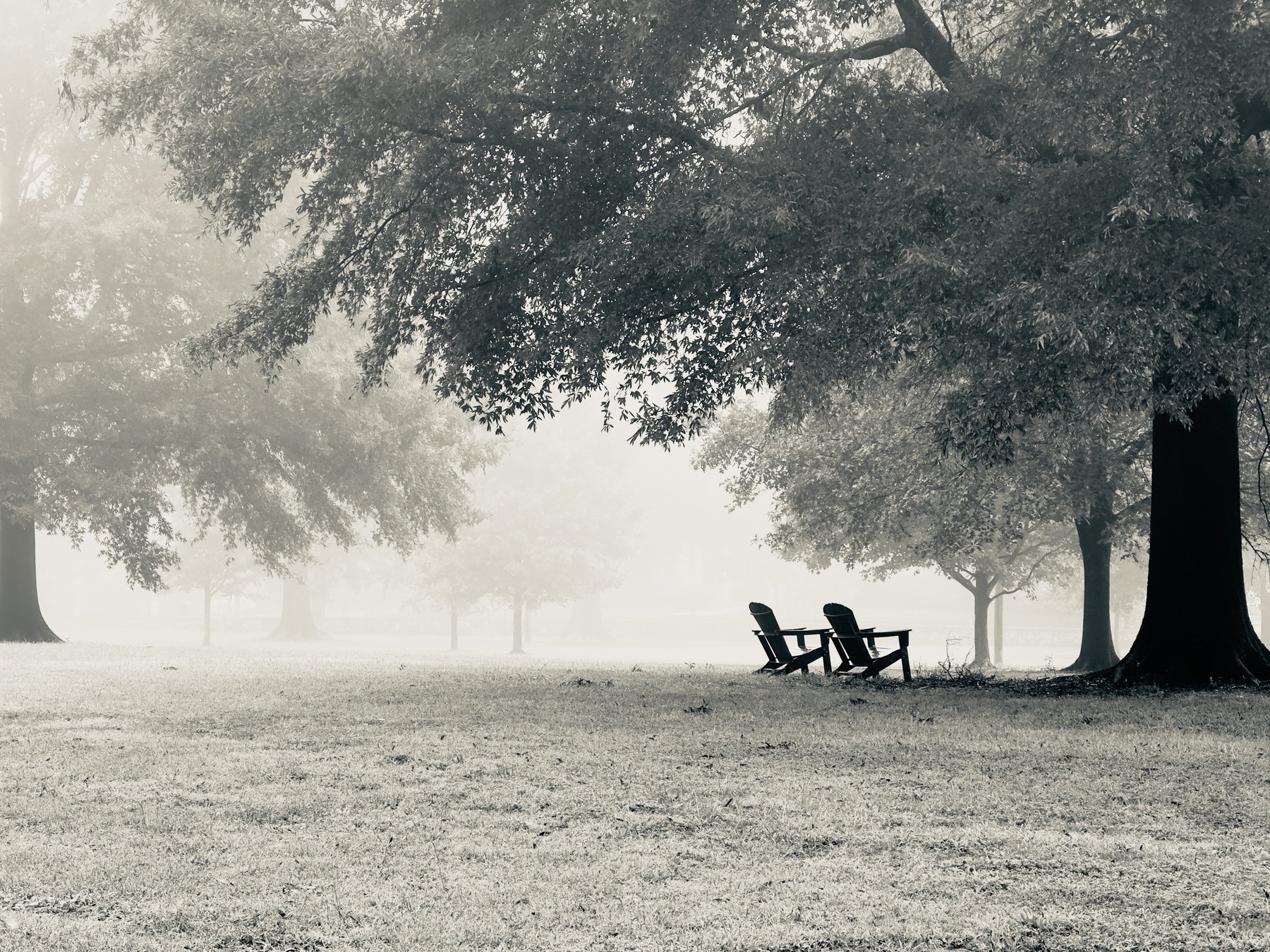
But just because you have looked at something, doesn’t mean you have seen it. Seeing is the first step in grasping reality as it is. It is the discipline of attending to reality outside of yourself and allowing the world to make itself known. This of course requires that you don’t immediately and habitually sort what you are looking at into the expedient categories of useful, interesting, productive, entertaining, or relevant.
The interesting part is that you can lose your sight, yet be blind to your blindness. This isn’t an all-at-once experience like a reverse epiphany. It’s more subtle, slow, and gradual. The darkening happens bit by bit until the world around you feels drab and grey. A tree becomes scenery. A neighbor becomes a person you wave to as you pull in the garage. A favorite piece of music becomes background noise. A meal becomes fuel.
How can you recover your sight?
First, something must interrupt you. Something outside you that you do not control. A bird call in the morning that is new. A child’s question. Grief. Beauty. For a moment, something in the world refuses to remain in the background and demands your attention. The first movement toward recovered sight enters less as an achievement than as a gift. You can make room for it, but you can’t conjure it. You can only respond to it.
Second, in the turn from looking to seeing, you perceive that you had not been seeing before. You must agree with yourself, and with the reality that has grabbed you by the scruff of your neck, that you are, in fact, not seeing well. This requires strength of ego and humility. For arrayed against you are all the technopoly powers lulling you with false words that you are in fact seeing clearly. They have extensive interest in monetizing not just your labor, but your leisure.
Third, recovery of sight requires an accurate diagnosis. Why are you not seeing? Are you looking at too much? Is the 300 vertical feet of scrolling each day blinding you? Is your total absorption and enslavement by practical purposes and goals leaving you exhausted? Are you incapable of boredom? Have you so thoroughly filled the nooks and crannies of your life that nothing uninvited can appear?
Fourth, you need a cure. A diagnosis will only get you so far before you fall back into darkness with unseeing eyes. The philosopher Josef Pieper suggests that abstinence has a role to play here. He suggests that visual fasting is part of the cure. In our cultural moment, that might include turning the phone and computer off and walking outside with a friend or neighbor. In doing so, Pieper suggests that you can create an empty space where something other than your own appetites and entertainments might appear. Simone Weil suggests that this kind of fasting opens you up to a kind of waiting, an active passivity much like standing in the water knowing the wave will crash over you but allowing it to anyway. You remove some of what keeps the senses perpetually occupied so that attention can change its posture from consuming to receiving, from using to beholding, from projecting yourself onto the world to allowing the world to correct you. Abstinence, however, is only part of the posture that will allow you to see.
Fifth, you must say yes to something else. You must learn to love something else in place of the scroll and swipe. And for recovery of sight, artistic creation of new speech, color, form, rhythm, sound, canvas, stone, and film can be the perfect antidote. These disciplines force us out of generic perception and back into particulars. They train us to see again.
Recovery is therefore both receptive and active: we cannot cause the initial awakening, but we can become the kind of people more available to being awakened, and more capable of remaining with what has appeared. Learning to see again is not something that is achieved and complete. Rather it is a form of being-on-the-way. It is a practice for which you will never outgrow your need.
The work begins here: not with trying to become more productive with your looking or attention, but learning how to see so that the reality of the world around you becomes visible once again.

I’ll ask you straight up—which is healthier for youngsters: (1) My dad’s leisure time spent in baseball, dancing, friendships, storytelling, and other social interactions; or (2) non-stop scroll-and-swipe?
If you need more information to answer that question, you probably shouldn’t be a parent.
Won't You Join Me?
In a world of increasing fragmentation, hostility, and disconnection, the paintings of Johannes Vermeer offer us a balm. How? How can the nearly 400 year old paintings of a nearly unknown artist in his time from a small town in the Netherlands offer us a vision of the healing we need? How can paintings help us be better neighbors, better citizens, better parents, and better workers?
As I visited the Netherlands in April 2023 for the Rijksmuseum’s Vermeer exhibition, I slowly moved among the dispersed paintings in the galleries. From across the large gallery room nearly 100 feet away, someone’s eye caught mine. My breath caught for a moment and I made my way, almost magnetically, over to her. There she was frozen in time, eternally gazing out at me. And gazing at the 20 others crowded around to see her. She is known as the Meisje met de parel or Girl With a Pearl Earring. And though she has been frozen in time for centuries, still she looks out at us, and welcomes us in. There is a generosity, hospitality, and invitation to this painting. In fact, this is a hallmark of nearly all of Vermeer’s works.
Generosity
Many of Vermeer’s works are marked by an abundance. Sumptuous table carpets, true to life maps painted as background on the wall, fine Delft vases, richly ornamented glasses. Vermeer has a keen eye for what Oscar Wilde called ‘the art we live with.’ And as he paints these everyday objects with a generosity, the question for us is: will we see generously? Will we recognize the abundance and beauty that already fills each of our homes and share it with others? Will we create lives, homes, and communities that more richly embody and share the art we live with? Will we labor to develop temperaments exquisitely susceptible to beauty?
Hospitality
Nearly all of Vermeer’s subjects are caught ‘in the act’ or ‘mid-sentence.’ Many seem to have just stopped what they were doing to look up or glance over their shoulder at us. Vermeer’s subjects aren’t just seeing us, they are welcoming us in. Even when his subjects aren’t seeing us, there is a ‘just pulled back the curtain’ hospitality. We are not meant to see the painting so much as we are meant to see into the painting. We are meant to inhabit the space, as a welcome guest. I wonder if Vermeer doesn’t offer us a model for how we ought to be living in this way as well. The latest technology ‘advances’ like the Apple Vision Pro offer us a “future in which people with enough disposable income can retreat from the physical world into the gated-face community of a 360-degree iPhone screen.” In contrast to the generous welcome of the world of Vermeer, the Vision Pro presents an invitation to tune-out the world. To retreat from those around us, to narrow our gaze and turn further inward. The question we are confronted with when seeing into Vermeer’s paintings is: will we receive the hospitality offered to us. Will we accept the gift of being seen?
Invitation
Vermeer offers us an invitation through his work. The invitation for us is to come and see. Then with the generosity and hospitality that we have been extended to go and do likewise. As the Girl With a Pearl Earring looks out at us we can almost hear her say ‘Won’t you join me?’ Will we recognize the generosity and goodness of the art we live with? Will we take that focused gaze directed upon us, and share that same welcoming, hospitable gaze with with others? Will we welcome, as we have been welcomed?


Vermeer, Learning to See, and the Moral Imagination
I am moved to tears. I stand in front of a semi-circular balustrade. Before me hangs a small (21 ⅜” x 17 ⅜”) painting. Most of the canvas is filled with red bricks. Puffy clouds float in the sky in the upper left corner. As my eye gazes downward, I see a woman facing me in the threshold of a house making lace while two children, their backs turned to me, play a game. A woman in the alleyway washes laundry, oblivious to my presence. And in the midst of this, I am moved to tears. There is a sense of quietude, peace, and rightness that is portrayed. The stuff of the earth depicted in the painting is utterly ordinary. But the feeling - the oughtness - of it, tickles the back of my mind and reminds me of other moments in my life I’ve felt like this - my wedding day, the birth of my children, moving into a new house, celebrating birthdays and Christmases and new jobs. Here there is peace. Here there is wholeness. Here there is rest.
Perhaps the most used adjective to describe Johannes Vermeer’s paintings is ‘quiet.’ Certainly we see this in the painting that moved me to tears - ‘Het straatje’ or ‘The Little Street.’ In it we see ordinary people, in an ordinary street, in an ordinary town in rural Holland. The facades are worn down and cracked while the style of facade indicates that the house is a late medieval one - certainly not a modern, wealthy house for a burgeoning merchant class. The buildings in the painting have no unique architectural features - no wall plaques or signs - and there are no church spires that allow the viewer to place the scene. The scene is so nondescript, that for centuries historians couldn’t locate the scene with any surety, though in 2015 the exact location of the painting was finally sleuthed out. Arthur K. Wheelock Jr, who for years served as curator for Dutch and Flemish paintings at the National Gallery of Art in Washington D.C. said that ‘The Little Street’ is “less about Delft, or even a small fragment of a streetscape in Delft, than about the poetic beauty of everyday life.”
The ordinariness, the quietness, the poetic beauty of everyday life depicted in ‘The Little Street’ tells a story. But the reality of the world that Vermeer lived in was different to the peace he painted. When he painted this canvas c. 1657-1661, the Netherlands had just gained their independence from Spain at the end of the Eighty Years War in 1648. They had fought England in the first of four Anglo-Dutch wars (1652-1654) and would fight England again in the Second Anglo-Dutch War during which Vermeer would join the Delft militia and spend the last three years of his life serving in the military.
But it’s not just the national context that belies the quietude of his paintings. Though he listed his profession as “painter,” he averaged a meager two paintings per year over his 20+ year career and he supported himself as an art dealer rather than a painter. His home must have been chaotic as well. His wife Catharina had 15 children over the course of their marriage, of whom 11 survived. Even in a large house, it must have been far from peaceful. A bankruptcy inventory after his sudden death records that his paint-grinding table was situated in the attic among thirteen drying racks for the family laundry. Not the idealized portrait of a gentleman-painter at leisure.
In this context, the peace that we see in Vermeer’s paintings didn’t just appear. No, I believe that he must have wrestled for the peace he painted. Laura Gascoigne writes that “Vermeer painted the peace he could never have.” In fact, most Vermeer scholars believe that although ‘The Little Street’ appears to be a naturalistic rendition, this painting is a composite of different buildings. In other words, though it feels so real, even the arrangement of the buildings had to be imagined. So, how? How did Vermeer find this poetic beauty just down the street?
He had to see differently. To see - truly see - is as much an art as it is an ability. Russ Ramsey writes, “We don’t just see. We learn to see.” ‘The Little Street’ depicts the most dignified thing in the world - ordinary people, doing ordinary things. But the way that Vermeer beholds and then depicts this scene leads all his viewers to awe, to enchantment. In doing so, Vermeer is showing us his moral imagination, recognizing turning points and possibilities in order to venture down paths that don’t exist yet. Though war abroad and chaos at home may be surrounding his real life, Vermeer is depicting a vision of the Good. Of women quietly at work, of children at play, of a particular-yet-transcendent flourishing and peace. It was this sense that captured my own emotions and imagination. It is this sense that captures me still.
Vermeer’s paintings don’t just capture a quietude of a moment in the mid-17th century, but of a moment-stretched-to-eternity. It is this quality that makes his work speak to us as well. We face a 21st century moment that is full of distrust, loneliness, tribalism, cynicism and despair. We live vast bureaucratic systems that are deeply de-humanizing. Yet from every side, institutional or political strategies are offered as solutions we need for our culture to change.
Like Vermeer, we need to see. I tend toward criticism, naming the things that are wrong with the world. Breaking down problems into manageable, changeable chunks. Highlighting gaps in what we know. Seeing systems we live in and how they can dehumanize us and mechanize us. But nothing good will be built solely by naming wrongs. I need to attend to the good, true, and beautiful. I need to be captured by a moral imagination that offers a better story. A better Good. Where will we find the wisdom, strength, and joy necessary to transform both our fearful hearts and our weary communities from places of conflict to spaces of communion?
We need to behold ‘The Little Street’ not only as an aesthetic delight of a time long past, but a vision of what could be now. In desiring a life rich in meaning and beauty, we need to lay down our fight for these things and apprentice ourselves to them. We need to let our imaginations discern the turning points and possibilities around each of us that lead to the quietness, peace, and rightness. Johannes Vermeer offers us an opportunity to practice enriching our lives in and through ‘The Little Street.’

Disenchantment and ReEnchantment
What’s to love about an alienated existence on a dead planet? This question is part of a pervasive narrative that lives in the background of all of our lives. A narrative that goes something like this:
Once, the world shimmered.
Now, it is dull and dead.
Once, we were connected to ourselves, living for ideals or heroes we admired.
Now, we live for an individual, disconnected, skeptical, meaningless existence.
Once our collective life operated in a cyclical, seasonal life.
Now, we organize along a linear rationality.
Once, we encountered a supernatural dimension in plants, earth, and sky.
Now, that same encounter slips around us without touching us.
What I’m describing is a state of disenchantment. The philosopher Charles Taylor describes it as “a state where the entire cosmos is drained of meaning and animate vitality”. Drained of freshness. Drained of wonder. Drained of color. J. R. R. Tolkien describes this experience as looking through a grimy glass window out into a drab, grey world.[1] The sociologist Max Weber described it as Die Entzauberung der Welt: “the unmagicking of the world.”
Perhaps we sense this disenchantment when we pull out our smartphone, sense an addiction but don’t want to stop. Or when we realize that our lives are locked in the climate controlled space of air conditioning but we still don’t want to feel the breeze on our skin outside. Perhaps it’s the pull to retreat into the bespoke reality of an Apple Vision Pro while your newborn daughter sleeps on your chest.
So what is enchantment then? The political theorist Jane Bennett describes it as being “struck and shaken by the extraordinary that lives amid the familiar and everyday” in a way that makes us “both caught up and carried away” simultaneously.[2] In other words, it’s something that we encounter, that hits us. It’s a sense of magic or wonder in the everyday that we feel and the ability to channel it through our minds and bodies. The poet George Herbert described it as ‘heaven in ordinarie.’[3]
Enchantment seems to be easier ‘caught’ than described. Consider your childhood - enchantment seems to come much more easily to children than adults. I remember very clearly the wonder of sitting against a huge oak tree, relishing the cool shade on a sunny summer day. I remember touching the bark of the tree and feeling almost a tingle shoot back into my finger – knowing that this tree was alive as well. As an adolescent I remember sitting against a similar tree and instead thinking about chloroplasts, xylem, and phloem - the mechanics of the tree rather than the tree itself. I could no longer access the same lens, the same perspective that I could as a child.
I wonder if this resonates with you as well. I wonder if deep inside you, there is a longing for the stuff of everyday life to be invested with meaning that sustains, nourishes, and comforts you. I wonder if you (like me) long to be experience wonder and surprise in the midst of a “cynical world of business as usual, nature as manmade, and emotion as the effect of commercial strategy.”[2] I wonder if the modern story - an alienated existence on a dead planet - just doesn’t satisfy. I wonder if, to some irreducible extent, we must become enamored - even enchanted - with our existence and the world around us in order to live lives of meaning and purpose. I wonder if there isn’t a way to go about ReEnchanting Us.
That’s what this website is about – not so much talking about re-enchantment, but rather engaging with the commitments, beliefs, and loves that may put us in-the-way of re-enchantment. This website is about deeply engaging with the world around us with a particular kind of close attention and feeling the sense of contact that emerges from that noticing. I invite you to join me in journeying toward the enchanted heart of things.
- Tolkien JRR. On Fairy Stories. In: The Tolkien Reader. Del Rey; 1986:33-90.
- Bennett J. The Enchantment of Modern Life: Attachments, Crossings, and Ethics. Princeton University Press; 2001.
- Herbert G. Prayer (I). In: The Complete English Works. Everyman’s Library; 1995:49.
On limits
I’ve been reading Wendell Berry this week:
The problem that ought to concern us first is the fairly recent dismantling of our old understanding and acceptance of human limits. For a long time we knew that we were not, and could never be, “as gods.” … But beginning in science and engineering, and continuing, by imitation, into other disciplines, we have progressed to the belief that humans are intelligent enough, or soon will be, to transcend all limits and to forestall or correct all bad results of the misuse of intelligence.
Part of the fundamental dis-ease with the AI discourse is the “selling point” that AI can transcend our human limits. Or as Berry puts it, that we can be “as gods.”
I learned a new word for a feeling that I’ve had for a long time: a Fine-Grained City.
And I learned what a Party-Wall is and why its return could make our cities more human!
That is the larger research agenda: to define a best-practice system for granular development that captures the efficiencies of coordinated production while preserving small-scale ownership, adaptability, and succession. The fine-grained city does not eliminate coordination. It achieves enough coordination for its pieces to remain independent, and enough independence for the city to keep changing.

Mike Sacasas on what we might gain and lose from LLMs:
My contention, then, is that when we are confronted with the opportunity to outsource the labor of articulation, we will find that possibility more tempting to the degree that we experience a sense of incompetency and inadequacy, a sense which may have many sources, not least among which is the failure to stock our mind, heart, and imagination
This is in large part what I hope this project might present - sources that stock our mind heart and imagination to articulate the good, true, and beautiful.

Currently restoring my wife’s grandmother’s pocket watch from 1889. I love how beautifully crafted objects can stand the test of time and provide a connection and link to one’s past.

Robert Farrar Capon on peeling an orange:
Peel an orange. Do it lovingly - in perfect quarters like little boats, or in the staggered exfoliations like a flat map of the round world, or in one long spiral, as my grandfather used to do. Nothing is more likely to become garbage than the orange rind; but for as long as anyone looks at it in delight, it stands a million triumphant miles from the trash heap.
What a delight to find a review by Ali Holcomb of a book (The Supper of the Lamb) that I was gifted many years ago, but only just finished reading now. If the quotes here don’t pique your interest to read it, there is something defective with your sense of humor!